
Last year, the Cologne Celtics Gaelic Sports Club held the inaugural Francie O’Connor Cup competition, with teams from Ireland, the Netherlands and Germany taking part. The team from Ireland who came all the way over to Cologne for the weekend was Monagea from West Limerick, and we were delighted to host them here in Germany. It was great for all of us to host a team from Ireland, but for our club hurling officer, resident hurling fanatic, and club legend, Frank, it was an event of even greater significance.
The 2024 Francie O’Connor Tournament is taking place this Saturday at Bezirkssportanlage Chorweiler all day, with an afterparty at the Black Sheep Pub in time for the Ireland rugby match.
In this conversation, we discussed how the competition is not named after himself, growing up with a passion for hurling, his relationship with his dad, hurling in Europe and much more. It was a real insight into the man who has been central to our on-the-pitch development over the last few years.
Frank: So, to counter the rumours of my unbounded egoism, I should clarify that I haven’t designed a tournament and named it after myself. In fact, the tournament is named after my father, whose name was also, in classic Irish style, Francis O’Connor. He was always known as Francie O’Connor, which is why at home in Ireland, everyone calls me Frank to distinguish me from my father, Francie. So, the tournament was named after him – not me! The next question to answer is why did we name a hurling tournament in Cologne after him?

Last year, I was in contact with a few of my old teammates from Monagea, the club I played with growing up at home, and we came up with the idea to invite them out to Cologne for a match, which inadvertently evolved into a mini-tournament after we invited our friends and rivals Eindhoven Shamrocks down from the Netherlands.
Growing up at home in the 1990s, my father had been involved in some capacity or other with every team my brother Malachy and I played on. So he would have known all the Monagea lads of my generation, several of whom are still lining out at home and made the trip out to Cologne last St. Patrick’s Day weekend.
My brother was slagging me for inviting out a team to play in a tournament without a trophy, so I ordered a cup. Then he was slagging me for having a cup with no name, so I thought, why not name it after my father as he had, in fact, played a big role in a lot of the players at the tournament’s hurling lives. So that’s where the name came from – repeat, I did not name it after myself!
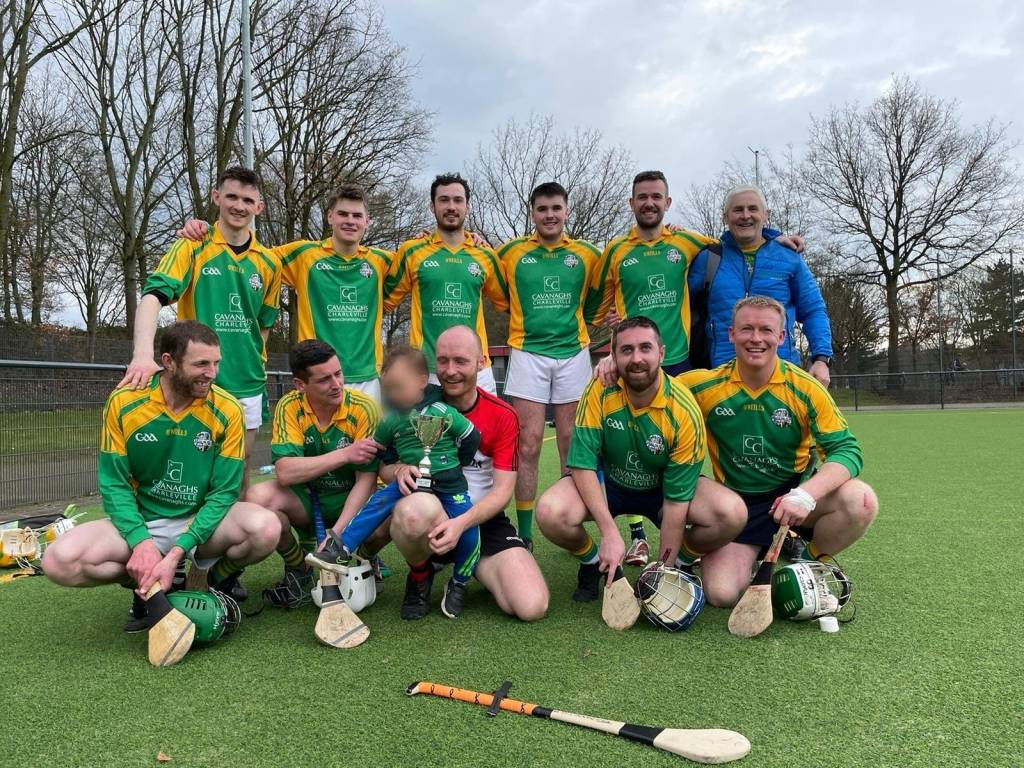
Unfortunately, this year, the Monagea boys aren’t coming out to visit us but we are delighted to have Annaghdown coming over. The tradition of having Irish clubs over to us has been started, and I think it’s one that we, all of us here in the club would like to extend. And Ciarán, one of our former players, deserves fierce credit for bringing over and organising everything for his teammates from Annaghdown.
This year, we have expanded the tournament, including three camogie teams, and by inviting Leuven Earls from Belgium, Darmstadt and, of course, Eindhoven are coming to defend their title! We will probably field upwards of eighty hurlers and camogie players on the day. So, the Francie O’Connor tournament continues.
What can you tell us about Francie O’Connor, your father and the impact he’s had on you and your love for hurling?
Frank: My father died when I was young, but naturally enough, he had a very profound impact on my life. A big part of my life with my father was very much shaped by our relationship through hurling: playing hurling, travelling to matches, watching matches, and endlessly talking about hurling. When he was young, he played for our neighbouring parish, Killeedy who were the big rivals of ours growing up. My father moved across the parish boundary from Killeedy, about a mile away and threw his heart fully into Monagea GAA once myself and Malachy arrived on the scene.

The first tournament my brother Malachy and I ever played in was in 1994, an under-ten blitz competition in Mungret, in beside Limerick city. It was held around the time of the 1994 World Cup, and it went on really late; the pitch was almost in the dark before we finished hurling. Eventually, I think it was Newmarket on Fergus, or some exotic crowd from Clare beat us in the end; we were absolutely heartbroken, and even a big back of penny sweets failed to console us!!
Basically, we spent our entire lives hurling – everything was based around hurling together. We were all down together at the hurling pitch at Monagea four or five nights a week. My father, brother, myself, and Jimmy Kelly, just long-range striking, practising sideline cuts, 21-yard frees and watching whatever games or training would have been on.
He had a fairly accomplished hurling career himself, playing in senior club hurling in Limerick’s last glory period in the 1970s. He was not a big man, but he was apparently a tough man, a hard hurler. He played as a cornerback and sometimes, randomly enough, at centre forward, if I remember correctly from all his stories. He played in one senior county club final. I’m not sure if it was ’73 or ’76. My father would have been playing against all the legends from that time, the Éamonn Cregans, the Pat Howards, the Joe McKennas, Jim O’Briens and all the rest of them. As well as alongside great hurlers for Killeedy like the Fitzmaurices who played for Limerick for years.
He sounds like an impressive hurler and person. What did he teach ye about hurling?
Frank: My father was a key figure in teaching my brother and I, and a lot of us around Monagea, about hurling and, importantly, about the values of hurling. He was also a man who very much emphasised, let’s say, the more physical dynamics of hurling. Hurling can be a hard game, and it can be a physical game, and you have to look after yourself on the field. But most importantly, you also have to look after your teammates. And whether for better or worse, I’ve internalised a lot of these lessons!!!

So, my father, Francie, instilled the love of hurling in me. He instilled the knowledge of hurling in me. When I compare my life to his, he was a farmer in the west of Ireland – in west Limerick. He’d never left Ireland and never had a passport. But I think he’d get a kick out of hearing about Germans and Greeks and whoever else playing hurling on the banks of the River Rhine in Germany. On that note, it’s nice then for my son to see a tournament here in Cologne named after his grandfather. Maybe, with a bit of luck, it’ll continue into the future so that he could also play in it when he’s old enough.
Great! What can you tell us about your own hurling career?
Frank: I had a very typical GAA career. I played a lot and very intensively for most of my childhood, up until the end of secondary school. Then life got in the way, I had some injuries, and different things happened, such as going to college and all the usual craic. I had a few unsuccessful attempts at trying to get back to playing for the Monagea junior team, but they never really worked out for various reasons.
To be honest, I was sure my hurling days were behind me, especially when I moved abroad with my studies and my work. I thought I had left my playing days, at least with a team, behind me. I still loved hurling, watched it all the time and never missed a chance for a puck around.

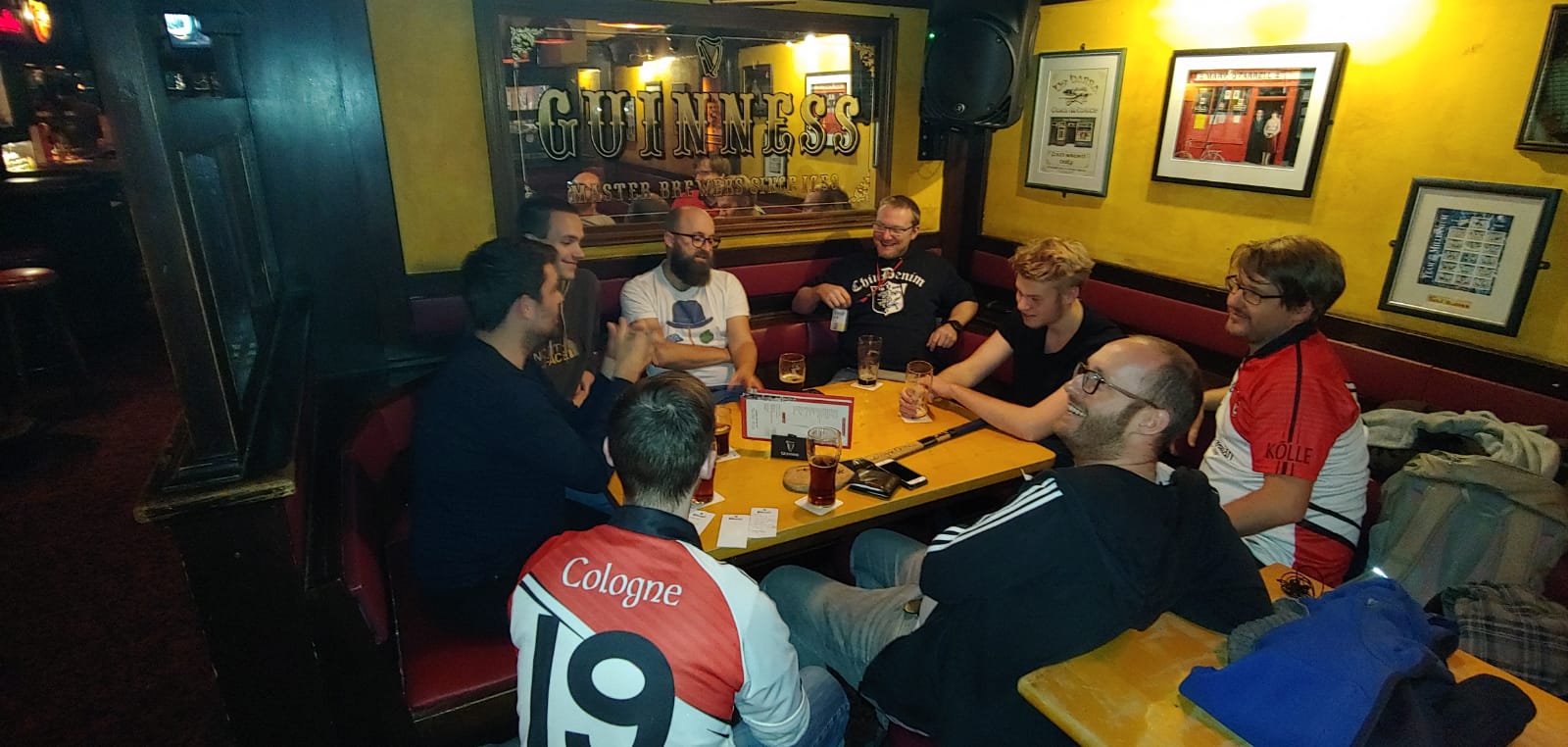
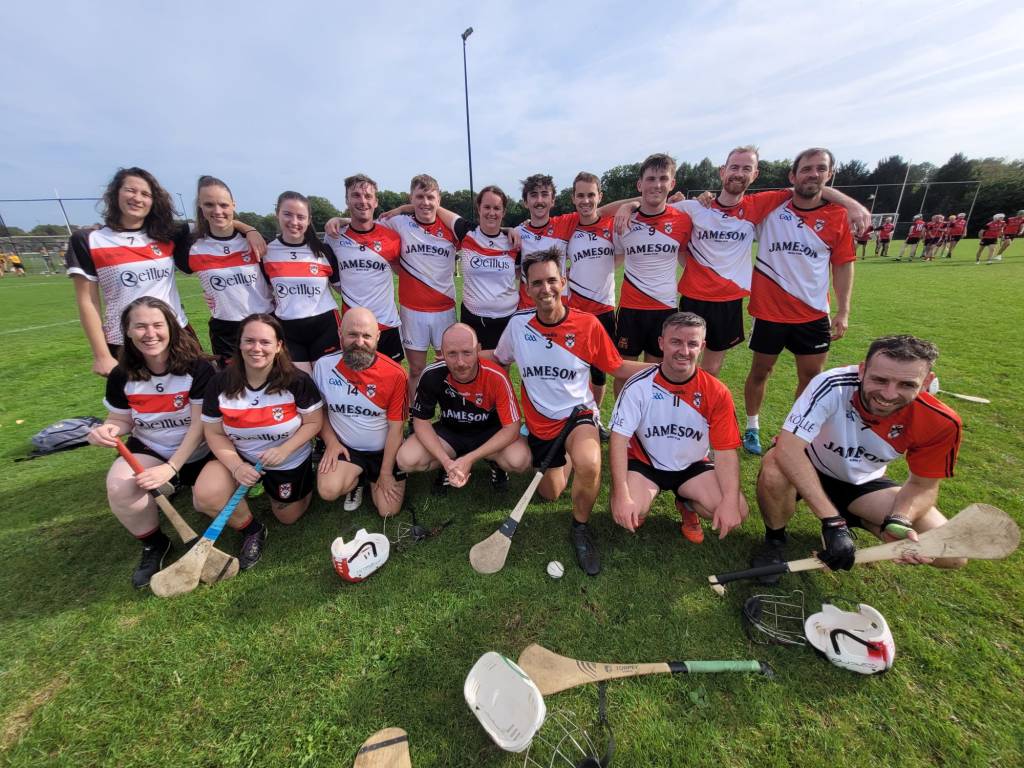
However, then things changed when I moved to Cologne. I arrived here in 2018, and I discovered that a German lad had set up a hurling team here. So, for me, it was the best news I could ever hope for. I’ve thrown myself into the club since then. It’s grown from three or four lads hurling on a field in Porz near the airport to about 60-70 members with a camogie team and with an adult male team. We have had several competitions where we’ve had two full teams! We’ve come a long way… And now, with the help of our other Limerick man, Ger Cronin, we also have the early stages of a youth team. And that’s amazing, and it makes me so incredibly happy.

Growing up with hurling in Ireland is a different experience than it is taking up the sport as an adult. Most of our readers are not based in Ireland, so they might not know how deep hurling roots go in places like Limerick that live and breathe the sport and the culture around it.
Frank: I mean, the first point about hurling is that it’s a great sport. It’s wonderful to watch, it’s wonderful to play. I love talking about hurling, I love thinking about hurling, and I even dream about hurling – a lot more than a man facing forty should be dreaming about his hobby!
Aside from its being a great sport, I think that hurling is almost magical in the sense that it can travel through time. I grew up as a child listening to the stories about hurling in previous times. I knew more about the hurling in the 70s than probably anyone who was born in 1984. I knew the names of all the players. I could probably have told you a whole series of accounts of the kind of hurlers around in those days – who was a dirty hurler, who was a strong hurler and all of that. Of course, there was no YouTube then, and there was very little video footage of hurling in those days. So, all these stories came almost exclusively through my father. Stories told and re-told thousands of times while driving around in the van with my father.
To give one concrete example, my father had told me about Jim O’Brien, who played for Bruree. Described him in almost reverential terms, how strong he was and all the rest. Years later, in college, I became very close friends with his son, Conor. Long before I ever knew Conor, I knew who Jim O’Brien was purely from this living hurling mythology. Hurling facilitates this kind of ongoing connection to the past across the generations that are long gone.
Similarly, my father, of course, would never have seen Mick Mackey and Paddy Cloughessy (who later became a politician – see GAA Links to Politics in Ireland for more of these stories) or Willie Hough (a fellow Monagea man) in the team and all those guys of the 1920sand 1930s play. But he would have known them the same way I knew of Eamon Grimes and the 1973 players. So then you have this kind of continuity across history through our hurling legends and the stories. Now, realistically, the stories are likely exaggerations, with some outright lies and mythologisation thrown in, but that makes me love it even more.
For me, then, of course, I came of age in our almost glorious period of the 1990s. I was devoted to Ciarán Carey. I thought Ciarán Carey was, and I probably still think he is, a God. I played centre-back or in the half-back line, and I adored watching him. Players like Mike Houlihan and Gary Kirby, I literally loved those hurlers in the 90s. I loved hurling in those days. I was at the final in 1994, and I was heartbroken (Limerick lost to Offaly – 3:16 to 2:13). I didn’t make it to 1996 (another Limerick defeat – Wexford 1:13 Limerick 0:14). These men were my generation of heroes.
For today’s generation of Limerick fans, for the likes of my son and my nephews and all the rest, we have another generation of heroes. They are living in an era of legends with Gearóid Hegarty, Diarmuid Byrnes, Cian Lynch, Kyle Hayes and all the rest of them. To be a Limerick person in this day and age, to be a Limerick hurling fan, is glorious. I mean, I never thought it would ever be possible; it’s like a dream. It’s a pleasure to watch this team. The Limerick hurlers are no longer like Bayer Leverkusen – the kind of happy losers, happy-go-lucky losers (With Bayer Leverkusen still in the running for three trophies at the time of writing – including the Bundesliga – this comment might not end well!).
As an Irishman abroad, as an emigrant, it also gives me a sense of place. With GAAGO and the internet generally, I can watch the matches and keep up-to-date, and then when I go home, I can talk to my neighbours, my uncles, the people I meet in the shop, all about hurling. They watch the same matches as I do; they feel the same way or more or less as I do about the matches. I am no longer out of the loop, and that would be different to previous generations. It’s a beautiful sense of continuity that here in the hubbub of urban Cologne, which is a very different, in many ways, place to live than rural West Limerick, I can still connect to home. This sense of connecting to my place and having a shared perspective of things makes me, quite simply, very happy.
You mentioned that your father never left Ireland but would have been pleased to hear about Germans hurling on the Rhine. In your view, what does hurling mean when we live abroad? Does its significance change or dilute when it is a sport that is not as well known to the general public?
What we do here in Germany and in Europe in general is very, very different from what hurling is at home in Ireland. Of course, it is. We’re dealing with a lot of adults who started hurling at the age they are, and I’m sure many people at home in Ireland would say you could never learn hurling unless you started when you were six, and that’s not true.
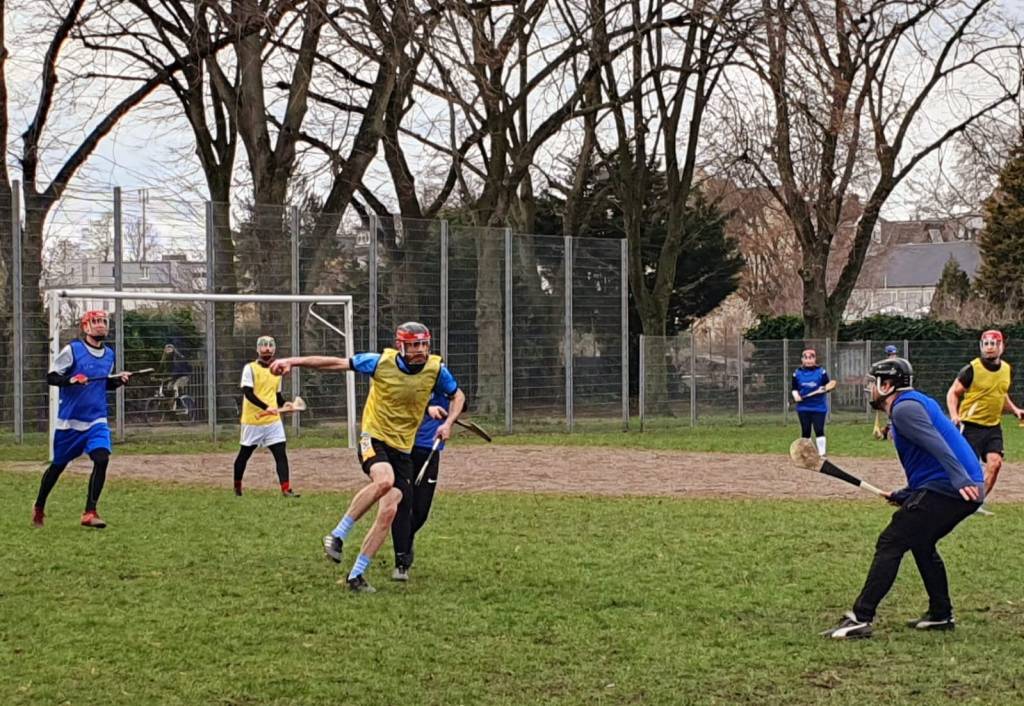
You only have to look at our players, Fabian, Arun, Malte, Johannes, and Jan, players like that – many more to name! – who, I don’t know what age they were when they started. They certainly weren’t in primary school like we were at home! But these lads are fabulous hurlers now, and they love hurling. Maybe they love it in a different way than the way I love it because they have a different experience. They played different sports as kids, but they love hurling now, and they’re a vital part of our club and our community. And that’s amazing – it’s really amazing.
It was absolutely scuttering down rain at training on Monday, and one of our German lads kept catching high balls like some kind of colossus, like a Bonn Billy Byrne! Those kinds of technical developments that would probably go unnoticed with adults hurling at home mean a lot here!
And it gives me great pleasure and honour, a pride to play and train with them. When you see how these players evolve and develop, and I mean, they’re not going to play senior county for anyone or be at the standard of All-Ireland winners but it is a different beast here compared to at home. I feel great pride when they stand their ground and fight for their teammates and when they master the little things when they get in a good hook or a shoulder. It’s glorious. It’s a different type of hurling community but it’s a wonderful community we have here.
Our love of hurling and the sport that we have and not only the sport that we have but the community that we build around it because it is very participatory, and it is something that you always get in other sports.
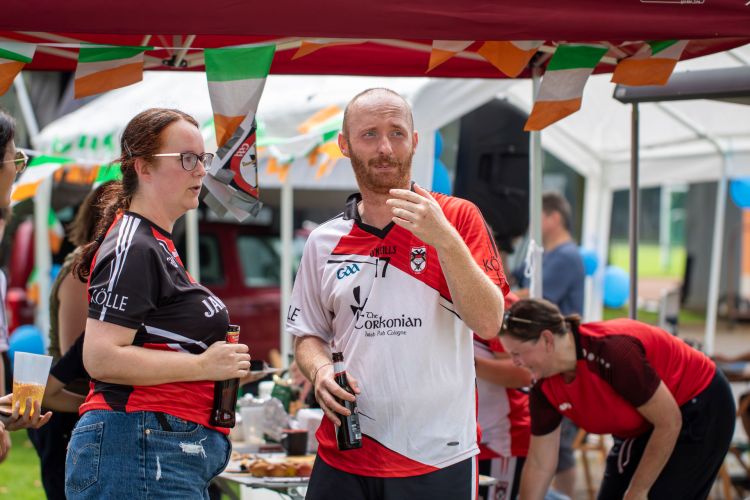
What does it mean to combine the worlds of hurling in Ireland – that more traditional hurling world that you discussed earlier – with the newer world that we – and clubs all over Germany, Europe and the rest of the world – are creating?
Frank: It’s fantastic to bring these two worlds together. It’s nice to bring the world of somebody who’s like me or Ger or yourself, Oisín whose childhood was shaped by hurling where the names of all these hurlers are in our mouths since the time we could talk… Hitting the sliotar off the gable end at home, playing hurling and talking hurling at school with friends, getting soaked wet at training and breaking your ‘good’ hurley, all these things. Then, to bring that world where hurling is something you live and breed organically to a place where you have lads who grew up playing handball, basketball and every other sport, and then they discover hurling, and they fall in love with it – that’s great.
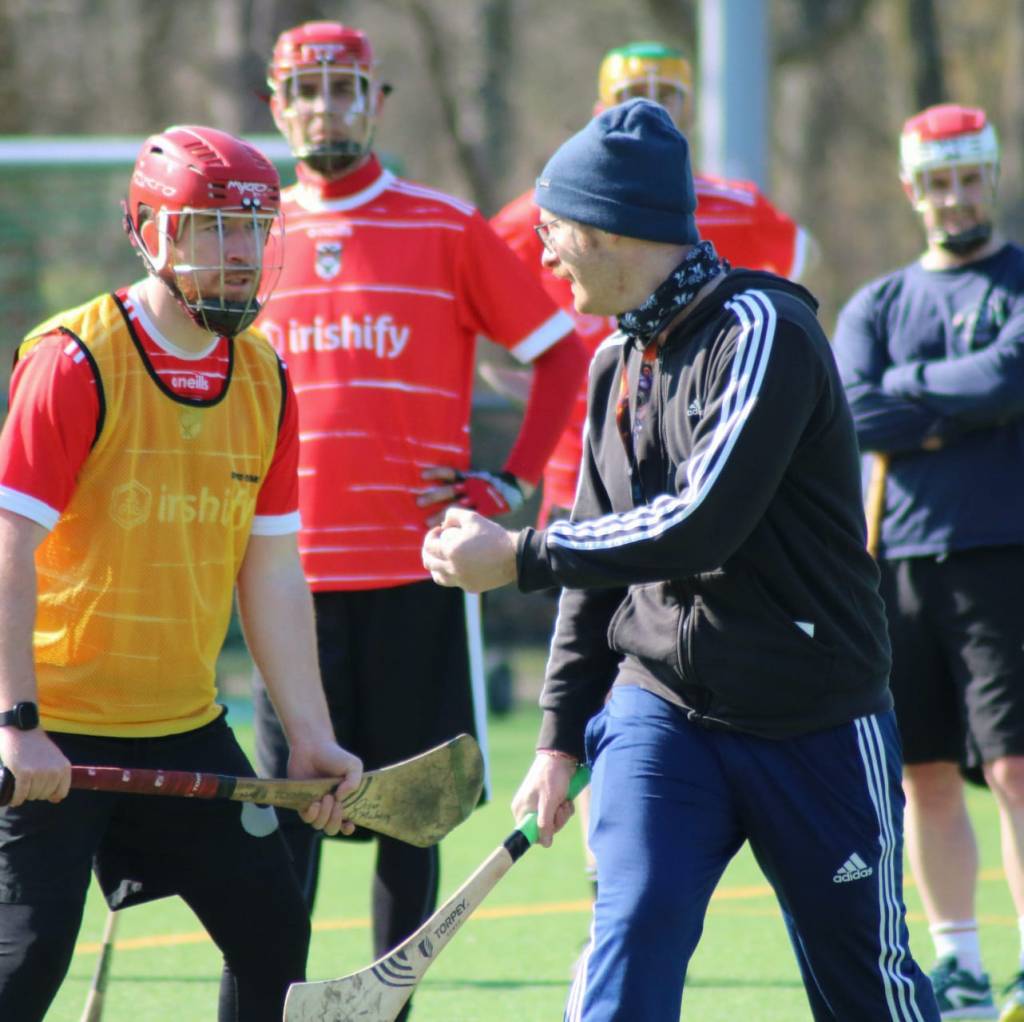
It’s part of my identity as a person coming from where I’m from. This is what I grew up doing as a child. It has always been in my life and maybe it has a disproportionate role in my life.
And for me, it’d be great if my son, who is a proper Kölsche Jung, born here and likely raised here too, also shared my love of hurling. Of course, at the moment, his main interests are the same as any other toddler, Paw Patrol and trying to con me into giving him sweets, but he does know about hurling and we do play around the house a lot. He even got a new hurley last time we were home from Willie Bulfin over in Bruff. And he loves his hurling jerseys. And, of course, he might grow up to have no interest in it, and that’s no problem. He can play whatever sport he wants, if any.
However, having the Cologne Celtics here means he has the chance at least to get to know this sport that is such a major part of his dad’s, uncle and grandfather’s lives. Hopefully, he will have the opportunity to visit Ireland in the future through the context of hurling, go to a Cúl camp or two and so on. It keeps that part of our identity going to the next generation.

Bringing over the lads from Ireland, like the Monagea boys the last time and the Annaghdown lads this time, allows our international members to encounter people who have a different relationship with hurling. For our members, such tournaments and events as the Cork Trip in 2022 or our trip to Monagea in October this year give them a little bit of a glimpse into the standards at home. At the moment, the standards are not comparable, but that’s to be expected. It’s a great experience. I think it’s a very reciprocally enlightening experience for both sides.
Monagea has invited us over to play a match in October, so the relationship between the two clubs will hopefully continue to flourish long into the future for the next generation of Cologne Celtics players to enjoy!
Thanks a million for your story and insights, Frank! A real insight into combining the more traditional world of hurling with GAA in Europe.
Of course, we cannot wait for our St. Patrick’s Weekend tournament – the Francie O’Connor Cup – it is on at Bezirkssportanlage Chorweiler this Saturday (16th March 2024), and it will be on from 10am until 5pm. It is, of course, free to attend, and we welcome all visitors and supporters!
If you would like to join up with the Cologne Celtics and experience the magic of hurling, camogie, Gaelic football and Ladies‘ football, please do not hesitate to contact us directly! We are always looking for new members and people willing to join the club, whether as adult players, youth players or social members.
 Cologne Celtics