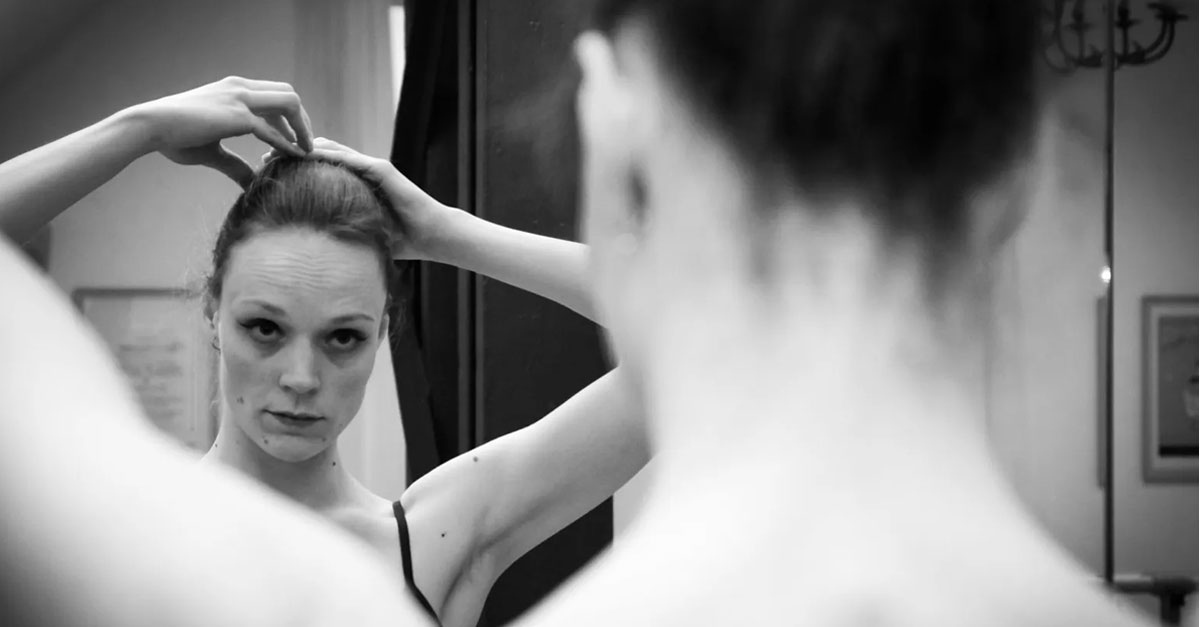
Svenja Hennecke joined the Cologne Celtics after contacting us in July 2023. That’s right, Svenja hasn’t even been with us for one full year yet. This news is quite surprising since it now feels like Svenja has become a veteran of our club. She has represented the club at tournaments since she started and has become one of our star camogie players! She has been such an ever-present that it is almost bizarre to think she hadn’t even started playing camogie this time last year.
Although Svenja may not have extensive experience (or any) in camogie and GAA from her childhood, she has always been a „very active, sporty, and athletic person,“ as she says in this chat. Her story here shows how adults coming to our sports later in life can utilise transferable skills from other sports, hobbies and such when joining a GAA club and starting with Gaelic football or hurling/camogie. In this case, Svenja has an extensive history of ballet, dance and gymnastics… not activities normally associated with camogie.
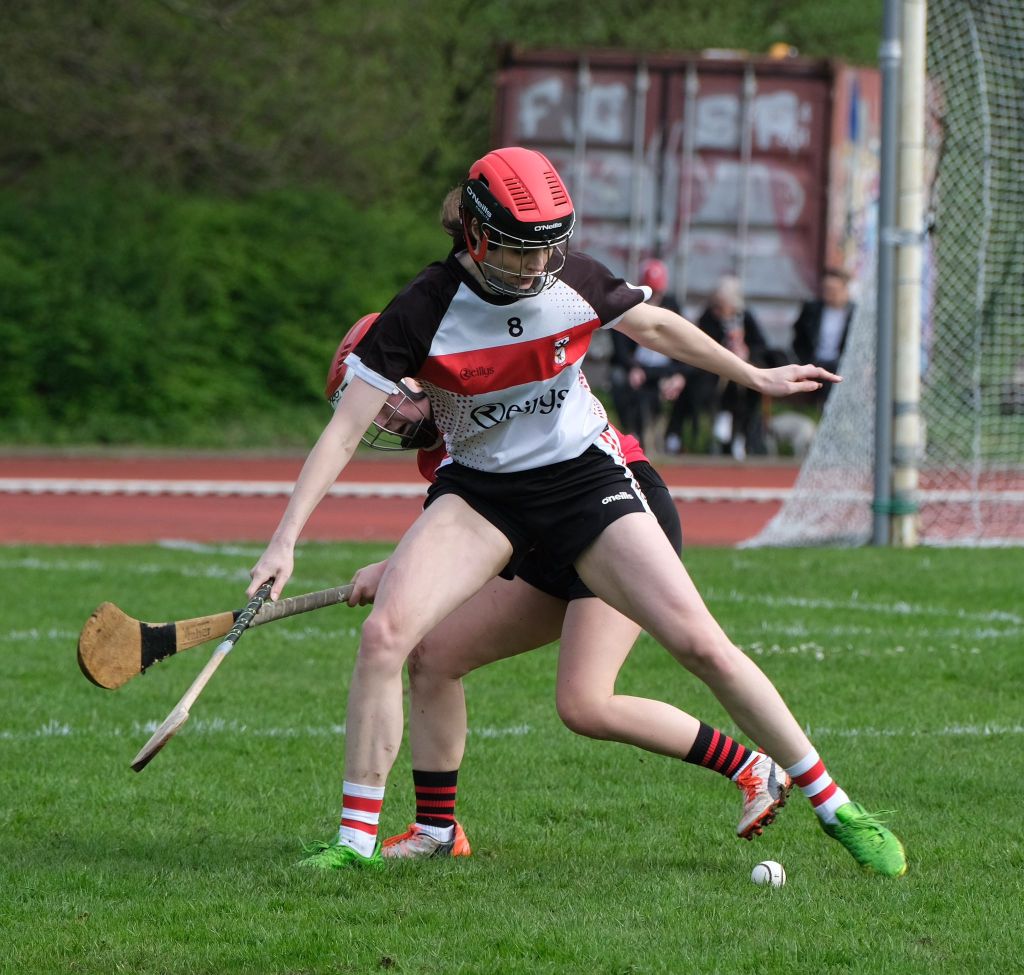
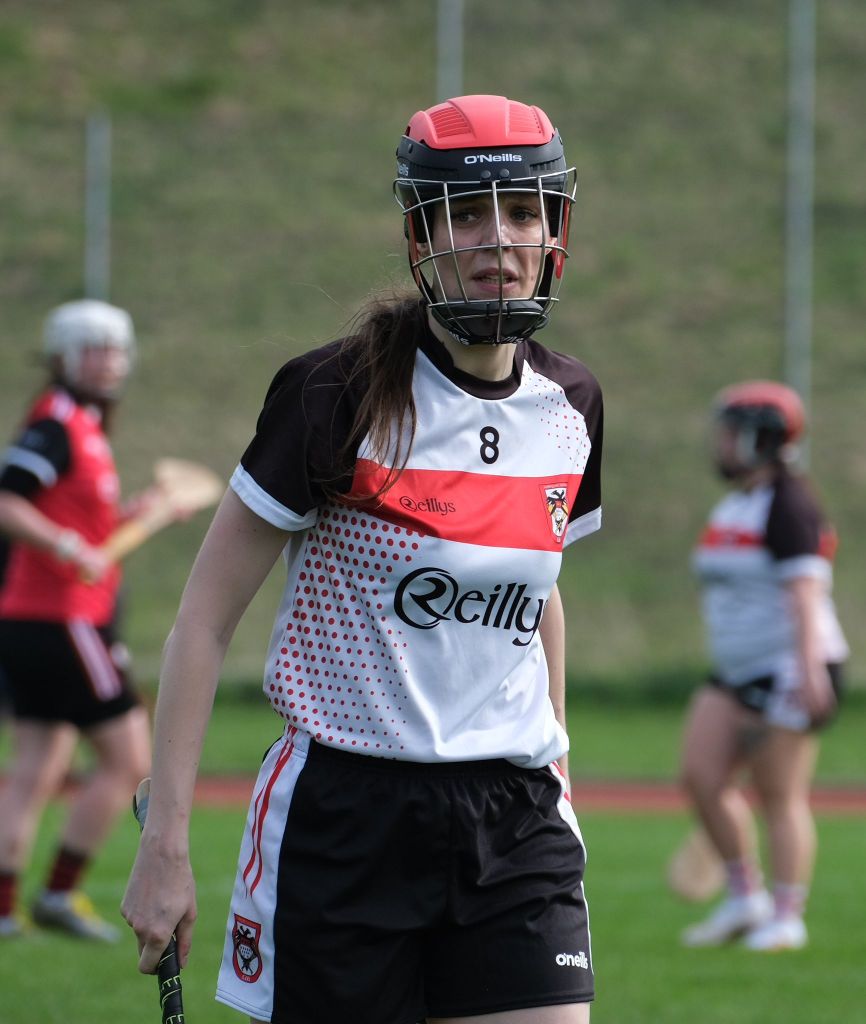
This interview follows a chat between Svenja and our club youth officer, Ger Cronin, at the recent edition of the German Cup in Hamburg. Ger also took the incredible photos in the article. Bain sult as!

What motivated you to start playing camogie with the Cologne Celtics GAA Club?
I missed having a team sport with real competition in my life. „Real“ in the meaning that… let me explain, there is competition in ballet, too, but only among your group, like your fellow dancers. You compete for higher legs, certain roles, better lines, more charisma, and all that stuff. However, you fight for yourself, your own victory in beating the other dancers but I was missing the „real competition“ of being on a team who are fighting for a shared goal. Ballet has another form of competition, but you cannot present or show its competition by numbers or scores as in camogie.

I wanted to be part of a team that fights together for the same thing. If you want to win in camogie, you cannot do it all by yourself. You need the other camógs. But in ballet, you fight all for yourself and all by yourself.
With these thoughts in mind, I came across a newspaper article in a local newspaper that introduced and presented the Cologne Celtics. I thought, well, this is my chance. What do I have to lose? So I contacted the club, came for a training session, and became passionate about these sports.
Can you tell us about your previous sporting experiences and of course, your experience in ballet? How big is the ballet scene in Germany?
I have been dancing all my life on a hobby level, an intensive hobby level, but never professionally. I started as a little kid of, I think, four years of age, doing early education, and went on with classical ballet. I did jazz dance and contemporary for a few years, but never as consistently as ballet.
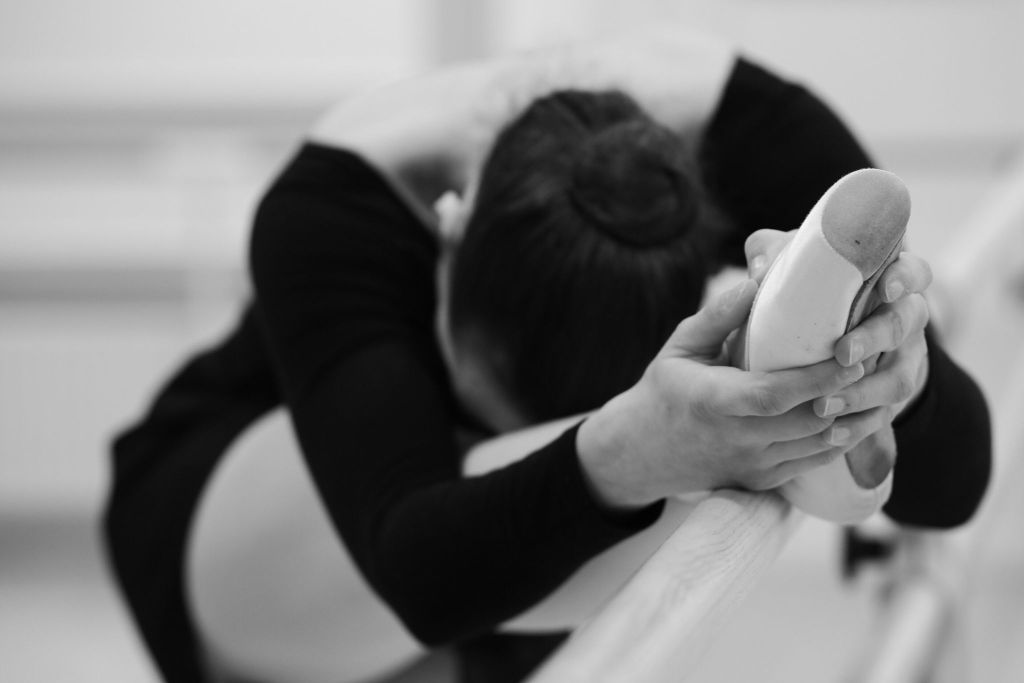
With ballet, I participated in many performances over the years on different stages with different choreographers, different roles, different music, and different costumes. We performed in Bergisch Gladbach, for example, in Bergischer Löwe several times. We were in Euskirchen in Burg Vogelsang and performed together with a choir. But I think the highlight was when we performed in the Cologne Opera House with a live orchestra. And these are some of the loveliest memories I have.
I also did gymnastics for about five to six years and participated in competitions quite successfully with a team. At one point, I had to decide between gymnastics and ballet, and I chose ballet. But I’ve always been a very active, sporty, and athletic person.
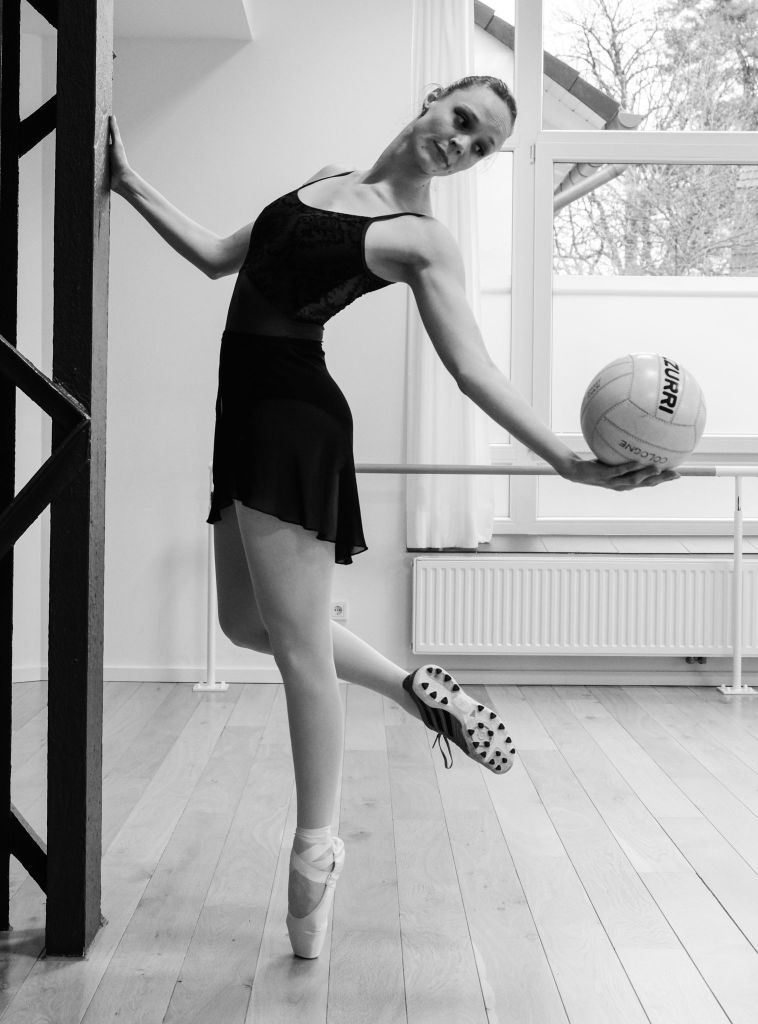
There are loads of nonprofessional ballet schools in Germany. There are two types of ballet education: the Vaganova system and the English system. I was taught Vaganova, even though the English system is taught more often in Germany. On a professional level, there are only a few schools that can train people as professional dancers and that have a good reputation internationally.
Have you discovered any surprising similarities between ballet and camogie? Do you think your ballet training has helped you in camogie matches? If so, how?
Oh, that’s a hard question, mainly because ballet is an art form that is also a high-performance sport, and camogie is a pure competition sport. But what I can think of is the mental strength and perseverance they have in common.
In ballet, as well as in camogie, there is a point of total exhaustion, but you need to keep on going; otherwise, you will not achieve anything. Whether that is higher legs in ballet, more stamina, or winning a match and defeating another team in camogie. I think this is one thing from ballet that helped me in camogie matches.

Another thing which helped me a lot is my body sensation, which is quite crucial for both sports types because it defines your movements. In ballet, to be able to dance elegantly and beautifully and as close to perfection as possible and to make it look easy. And in camogie, to pass the sliotar, whether it is via stick pass or hand pass, well enough so that your fellow team player can either catch it or control the pass as efficiently as possible.
What aspects of camogie do you find most challenging?
For me, it is looking ahead for the next move, the next part of the play, whether that is our own team’s next move or the other team’s next move. Unlike ballet, which has clear choreography or rules, so to speak, that tell you exactly when and where your next step or move is, camogie doesn’t have any rules in this regard.
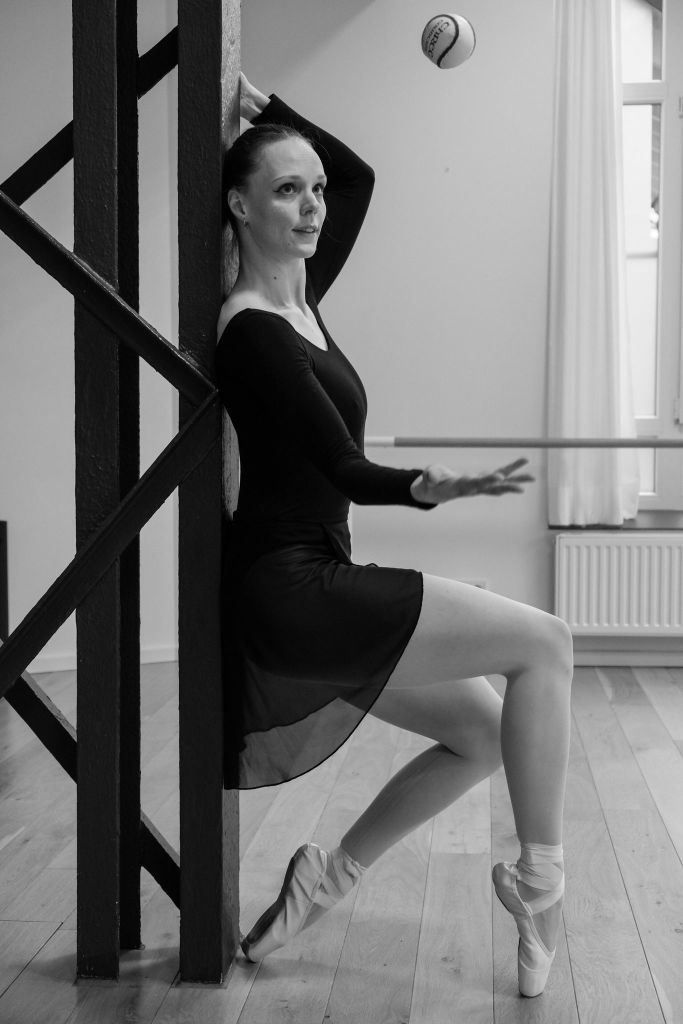
This part of the game is also the most interesting aspect because every game is different, every game is unique, and every game has its own choreography, so to speak. This „choreography“ develops exclusively from the game itself, in that very moment. So there is nothing really you can plan. You have to take it as it comes. So this unpredictability, this inability to plan ahead with full confidence of what will happen next, and the need to flexibly plan your next step is what I find most challenging.
What do you enjoy most about being part of the Cologne Celtics GAA Club and the camogie community in Germany and Europe?
The thing I enjoy most about being part of the Cologne Celtics GAA club is the team spirit and the family-like atmosphere among the players. The club is very open-minded towards everyone and everything without any prejudice, and you feel comfortable and accepted from the very first moment.

Among other camogie teams, you meet other camogie at the matches, and you have to fight them on the pitch, but off the pitch, you hug and have a pint and a chat together. And even though this is quite a contrast, I do enjoy it.
What has been your favourite Cologne Celtics experience so far?
There’s nothing in particular that comes to my mind. It’s the training sessions in general, the travels, the matches, the partying after the matches, the club events—all these things build and are parts of one big experience bubble that gets bigger and bigger over the time I’ve been there. I am looking forward to more of these experiences going forward!
How did you feel about representing the Cologne Celtics at the German Cup and in the final?
Even though we lost in the finals, it was a very successful day for the camogie team. I am very proud to have played with such amazing camógs. We’d never played or even trained together in today’s team’s constellation, and we managed to get into the final. So this is way more than any one of us has thought of. And yeah, I’m very happy to be part of this team
As a newcomer to camogie, what have been some of your biggest surprises or discoveries about the sport?
I was surprised by how big the camogie scene is in Germany and Europe, even though it is a niche sport everywhere outside of Ireland. And it’s amazing to see that there are enough or so many clubs to be able to organise European tournaments and even a German Cup. I was surprised to see that there are so many non-Irish playing the sport with the same passion and fire as the Irish players. Many of these players only started playing as adults, but they fight for the sliotar as much as those who have played since the age of five!
What advice would you give to someone thinking about trying out camogie for the first time?
Just do it. Don’t be afraid of starting at an older age or anything. The GAA community is welcoming and open to everyone. That’s what I did, and it’s the best thing that I’ve done in many years. The only thing I would have to advise, though, is that you shouldn’t be afraid of a small and speedy ball and people tackling you. It’s so much fun and a great feeling being on the pitch, playing for your club with your team, having people standing at the sideline, cheering and supporting. It’s just amazing. So just do it!
What are your hopes for the future playing for the Cologne Celtics?
I have played in European competitions and the German Cup so far, but I hope to participate in the next GAA World Games and contribute to the Cologne Celtics‘ success as well as I can. I also hope to make many, many more happy memories and experiences with the Celtics. Kölle abú!
Thanks a million to Ger and Svenja for this article. We really enjoyed it!
If you would like to follow in Svenja’s footsteps—and „just do it!“—then why not contact the Cologne Celtics today? As Svenja says here, it has been one of the best things she’s done in many years and what is the worst that can happen? We welcome players of all experience levels – men, women and children – and are ready to hear from you. You can also find out about how to become a Celt at our „join the Celtics“ page, and here you can become a full playing member or social member of the club. Make sure to follow our active social media accounts, and don’t be afraid to get in contact with us.
Kölle abú!
 Cologne Celtics